(03)Services CRM or web app
Custom CRM development
(01) What's included
From a prototype to the system your team runs on
- (01)
Discovery and a prototype before code
First we take apart how the team works: who takes the orders, where the stock lives, which reports the owner reads. On that we build a clickable prototype, so you see the system before the first line of code.
- (02)
Roles, permissions, accounting integrations
A manager, the warehouse, a courier and the owner see different things. Permissions follow the roles, and data from accounting, payments and shipping arrives in the CRM on its own, with no copying by hand.
- (03)
Support and development after launch
A CRM grows with the business. After launch we keep the system on support: monitoring, new modules, reports — on a monthly package of hours.
(02) Custom or off-the-shelf
When your own CRM pays off, and when a ready one is enough
An off-the-shelf CRM is cheaper to start with and quick to set up. A custom one makes sense when your processes no longer fit the template, and per-seat fees plus workarounds cost more than building.
An off-the-shelf CRM is enough if
your processes are typical — lead, deal, payment; the team is small; and the integrations you need are already in the service's catalogue. Then custom development will not pay off.
You need your own system if
you run several brands or locations, your own stock and delivery, accounting in 1C, and the data is scattered across spreadsheets and three services. Then the CRM becomes the team's workplace, not one more tab.
(03) Integrations
A CRM the data flows into on its own
We connect what already runs in our clients' projects. Anything else is estimated during discovery.
Accounting: 1C
Products, stock and prices stay in sync with 1C. At Tory Store accounting kept running even during the move to a new platform.
Shipping: Nova Poshta
Waybills and delivery statuses right on the order card, without a separate carrier account.
Payments: WayForPay
Payment is tied to the order, and its status shows in the CRM.
Messengers and bots
Telegram, Instagram, WhatsApp and Viber in one feed next to the customer profile and their orders. A bot handles the routine questions.
(04) What it costs
From $5,000, a fixed estimate after discovery
A custom CRM starts at $5,000: a system for one team with roles, orders and one or two integrations. Beyond that the price depends on the roles, modules and integrations, so we do not name it blind. Discovery and the estimate take up to two weeks: you get a plan with milestones, dates and a fixed price per milestone. You pay by milestone — a prepayment for each stage, the rest on delivery. The first working release takes from 10 weeks.
(05) How we work
Five steps to launch
- (01)
Leave Request
Press Enter and tell us about the idea in any form — a call, a message or a two-line brief. We reply within one business day.
1 day - (02)
Discuss Goals
We dig into the business: audience, goals, metrics and constraints. You leave with a clear picture of what we are building and why.
2–3 days - (03)
Create the Plan
Scope, milestones and the team are fixed in a transparent roadmap, so you always know what happens next.
3–5 days - (04)
Agree on the Budget
A fixed estimate tied to the milestones. No hidden costs — every change is discussed before it is billed.
1–2 days - (05)
Start the Work
Design, development and launch in short iterations with regular demos. You see progress every week, not at the end.
from 4 weeks
(06) Case studies
CRMs already at work
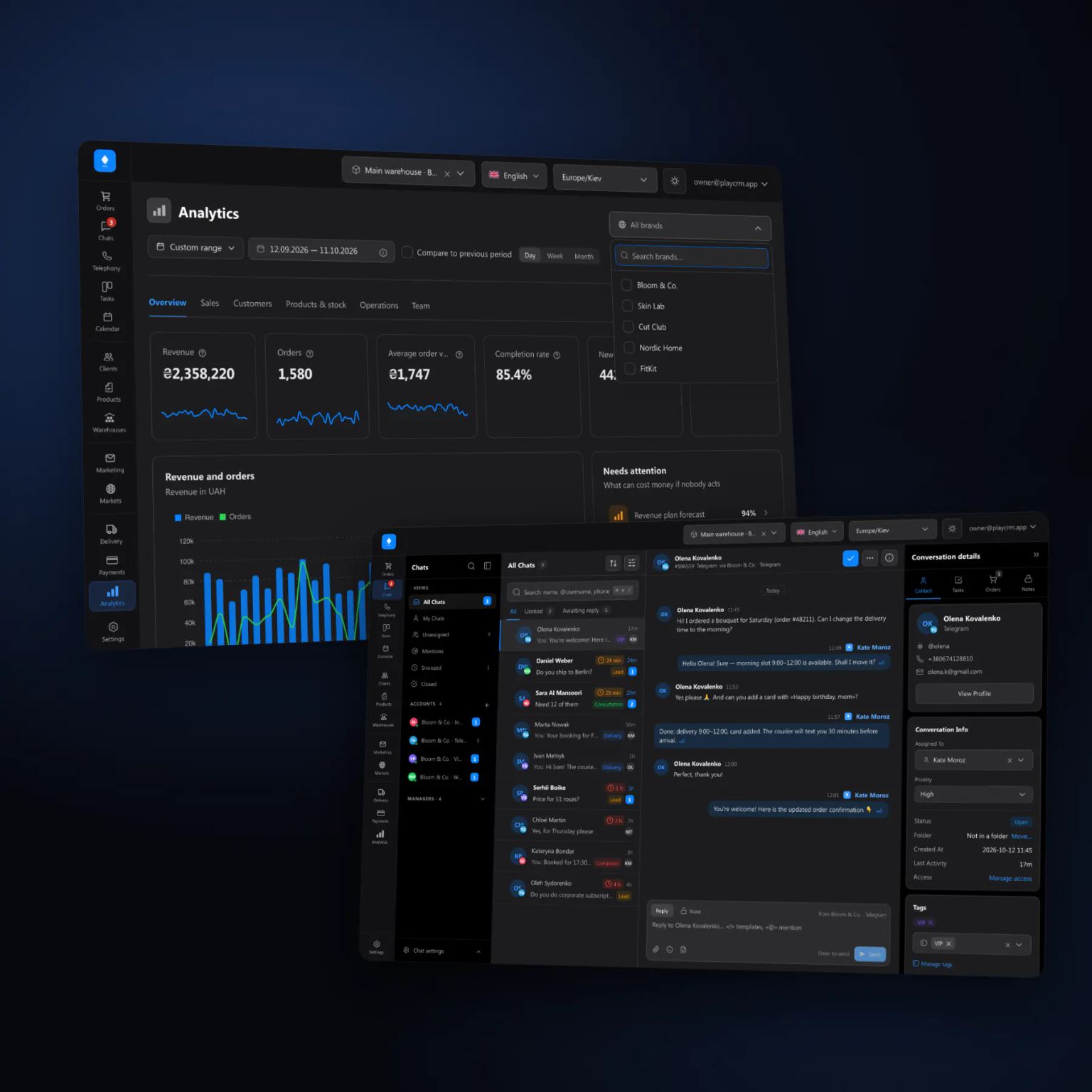
PlayCRM
SaaS for retail and service businessesOur own product: one account for every brand the owner runs — orders, stock, chats and delivery.
Tory Store
Flowers and gifts, UAEA CRM and courier software in place of an old system: key flows run up to 20× faster.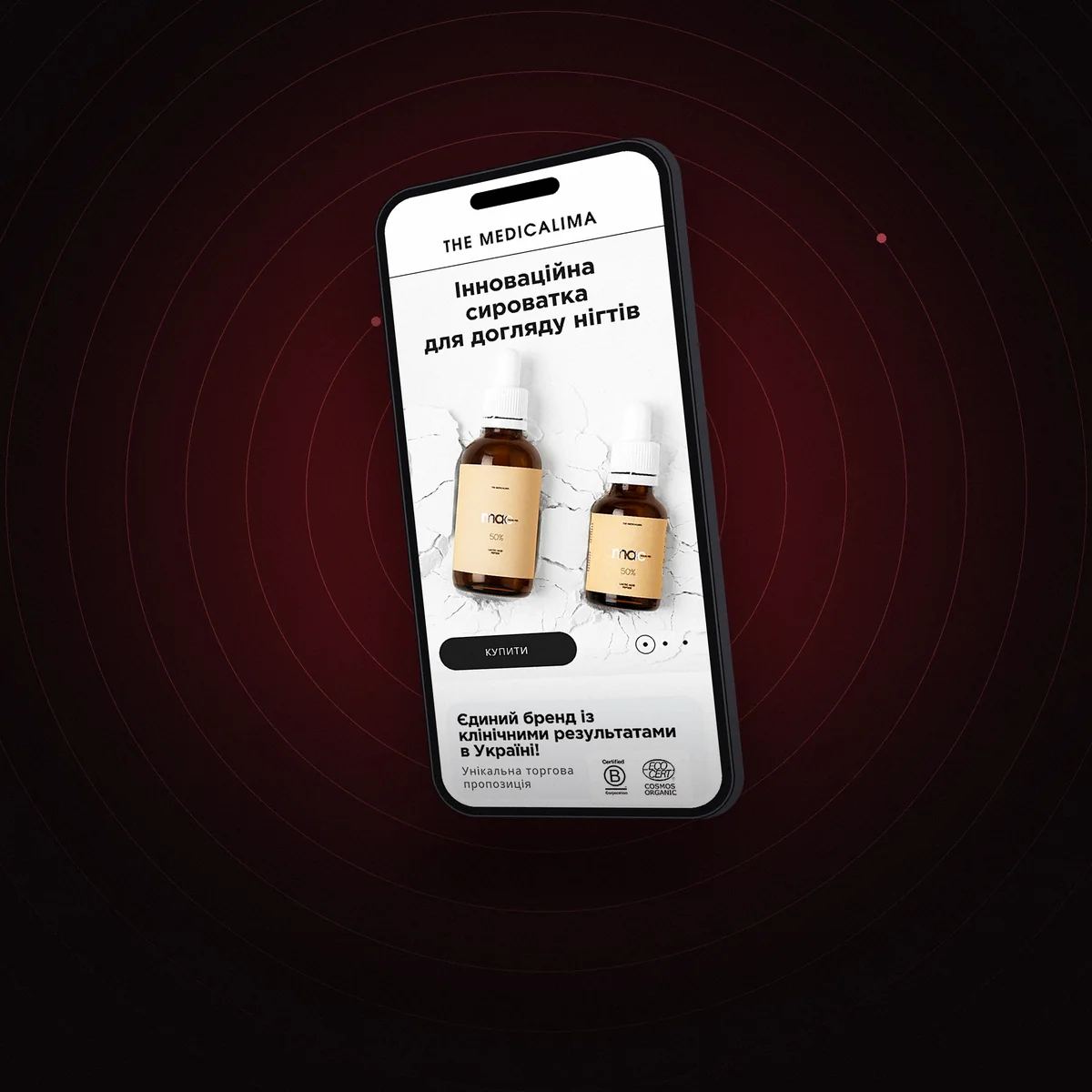
The Medicalima
Dermacosmetics, e-commerceProducts, orders, stock, Nova Poshta and WayForPay in one panel instead of WordPress.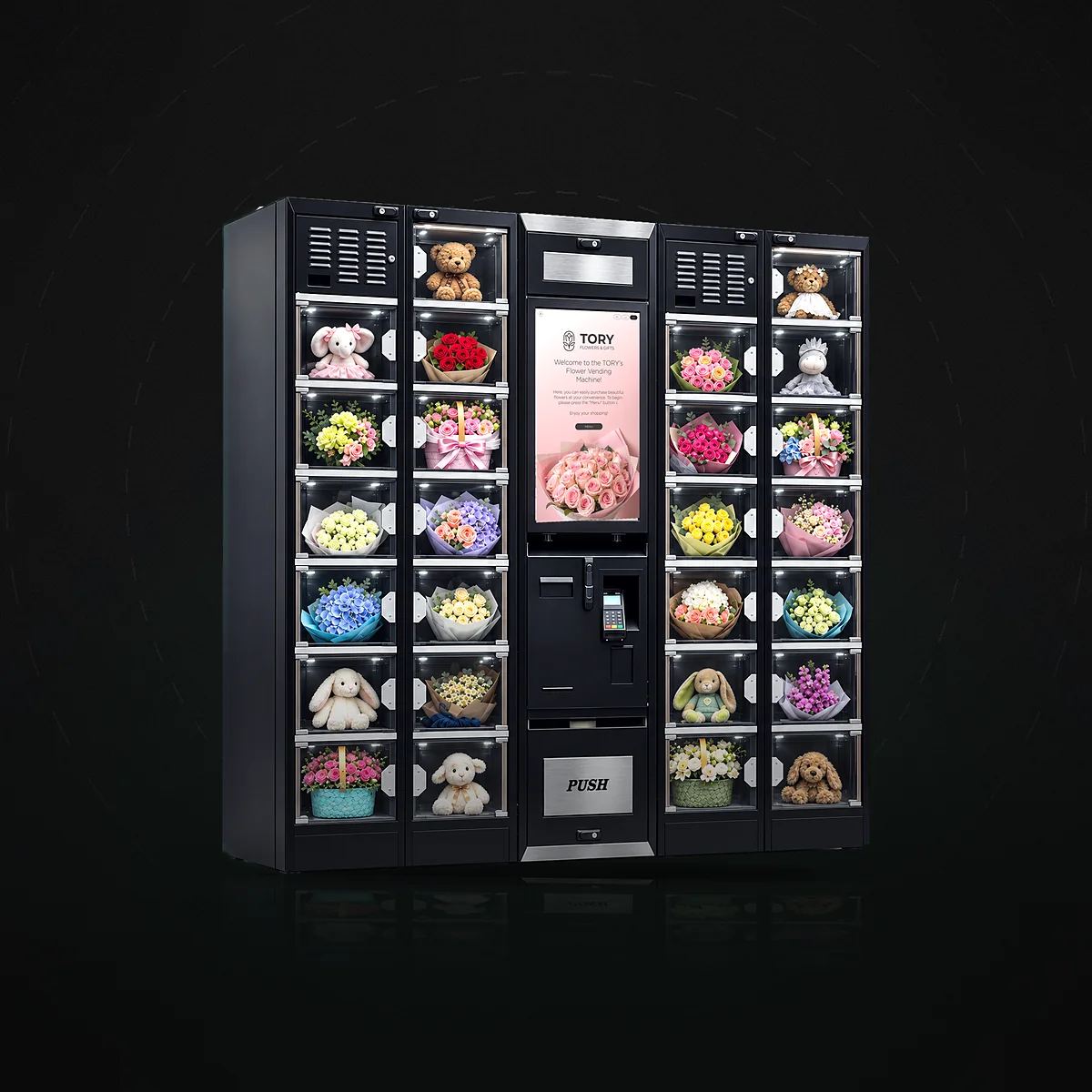
Floromat
Vending, retail, UAEA fleet of vending machines in the CRM: stock, temperature and sales, managed without site visits.


(07) After launch
Support and growth
Launch is not the end. Most of our products we keep running: we watch, fix and develop them.
The format is a monthly package of hours sized to your needs. Terms and response time are fixed in the contract.
- 1 day
Response within a business day
Questions and bugs go to a shared chat; anything critical is fixed first.
- 24/7
Monitoring and backups
Uptime, errors and backups are watched — not noticed when somebody complains.
- 1 backlog
Development by priority
New features are planned together and shipped in iterations, not in one big release a year.
- 1 report
Monthly report
What was done, how many hours it took, what is next — without you having to ask.
(08) Questions
What people ask before they start
How much does a custom CRM cost?
From $5,000. Beyond that it depends on the number of roles, modules and integrations: after discovery you get a fixed estimate by milestone, and every change is discussed before it is billed.
How long does CRM development take?
The first working release takes from 10 weeks. Before that come discovery and the estimate, up to two weeks. You see progress at a demo every week.
Can you move our data from the old system?
Yes. At Tory Store we moved 10,000+ products automatically and set up sync with 1C, so sales never stopped during the move.
Which integrations can you connect?
1C, Nova Poshta, WayForPay, Telegram bots and messengers — Telegram, Instagram, WhatsApp and Viber — already run in our projects. Other services are estimated during discovery.
Who owns the CRM code?
You do. The repository, the design files and every access are on your side from day one. After launch you can develop the system with us or with any other team.
What happens after launch?
A warranty period for fixes is part of the project. After that — support on a monthly package of hours: monitoring, development, reports.